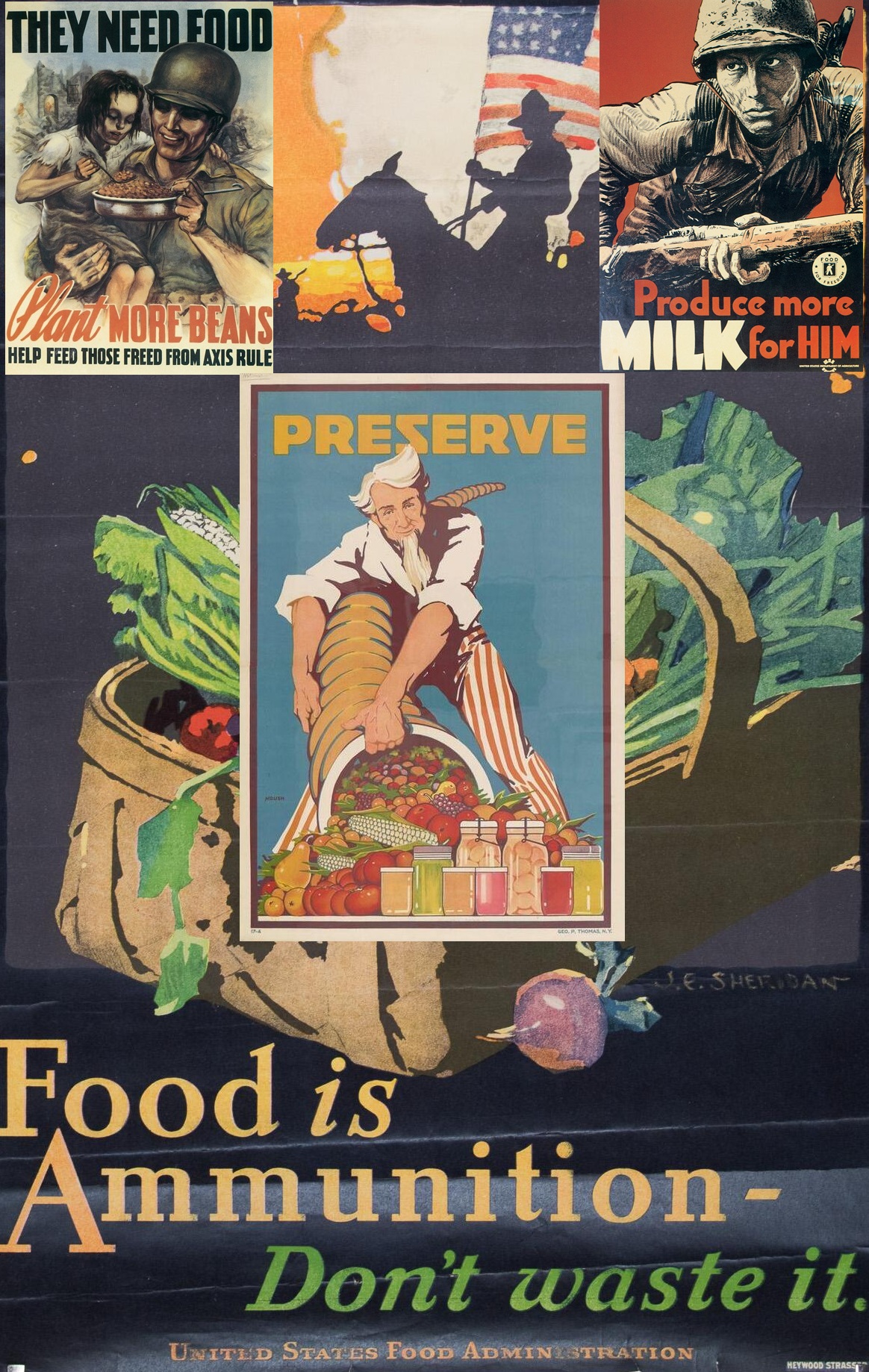
The Food Plate is a Pyramid Again and its Upside-down?!
I feel inclined to blog about the new RFK Jr upside-down food pyramid because I have written a blog every time the USDA food pyramid guidelines have been updated. This time, instead of announcing the update, I want to inform the public of the history of the food pyramid which is rife with lawsuits based on conflict of interest.
Here is a pictorial history of the National dietary guidelines:
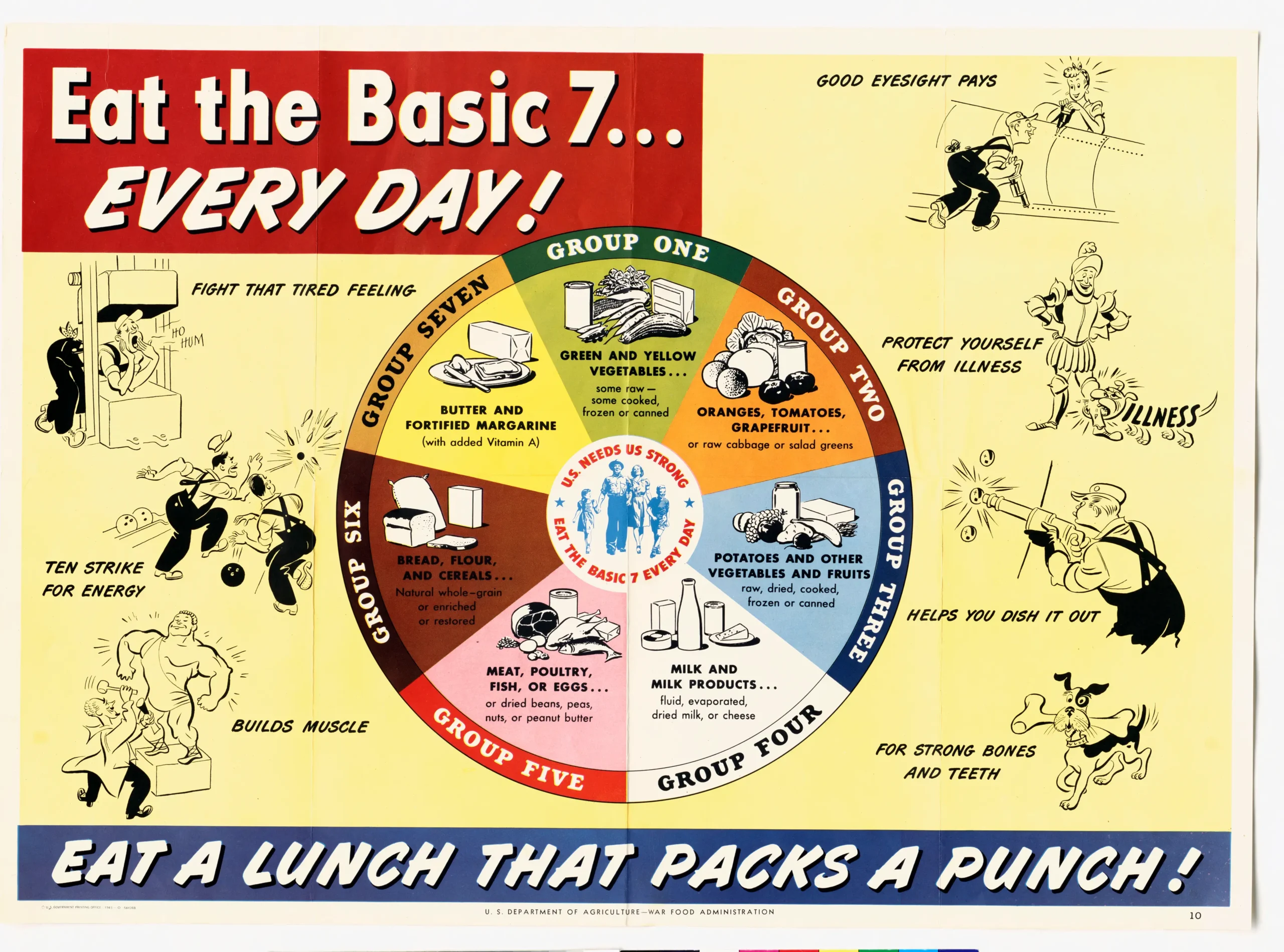
1943, The Basic 7 Food Groups
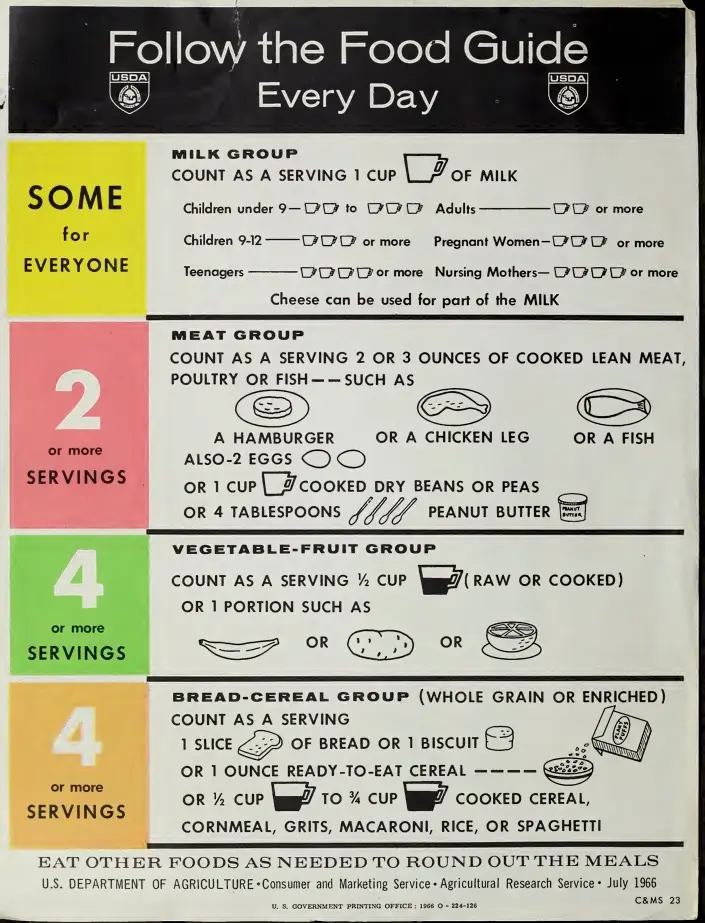
1956, The Basic 4 Food Groups
1980, 7 Point Dietary Guidelines
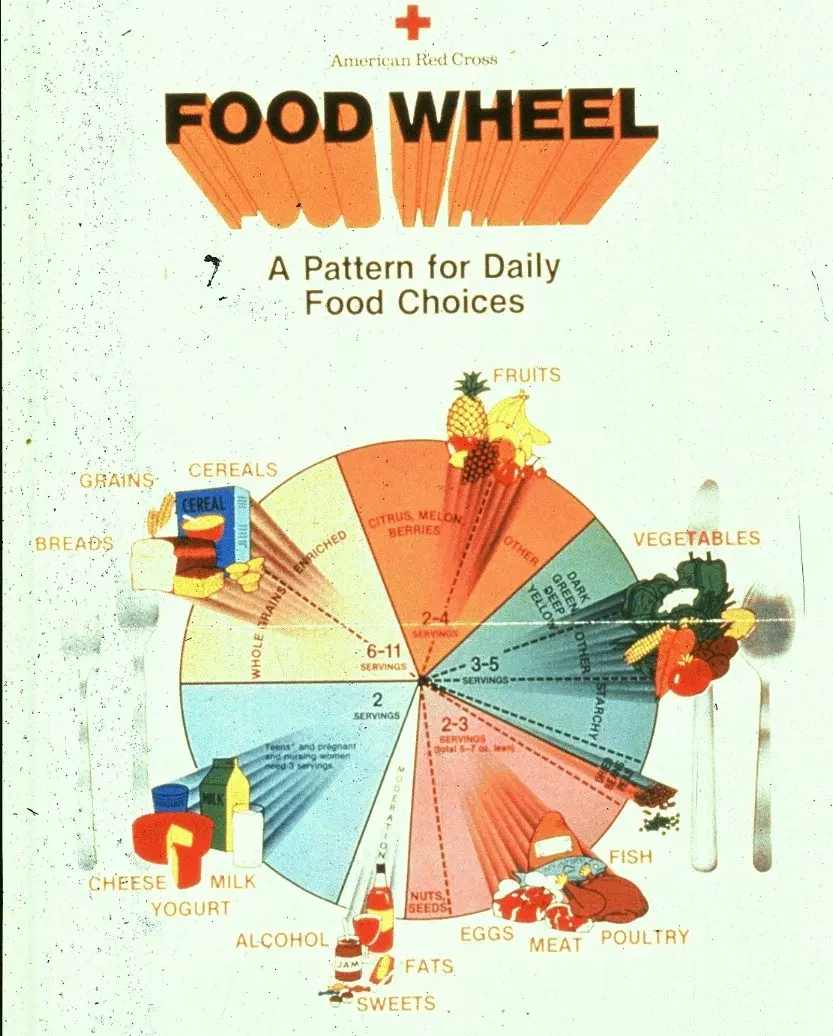
1984, The 5 Food Groups
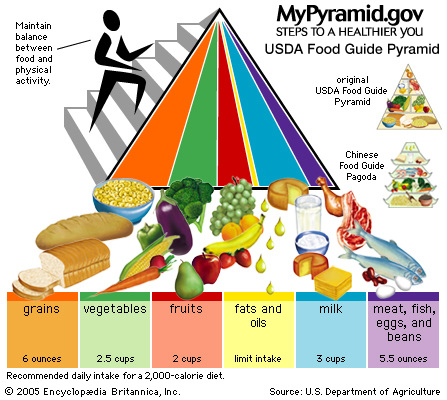
2005, MyPyramid.gov
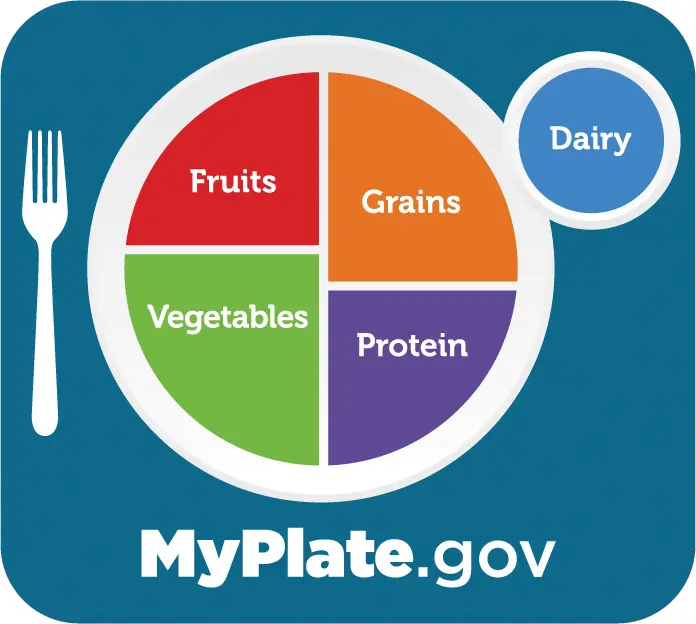
2011, MyPlate.gov
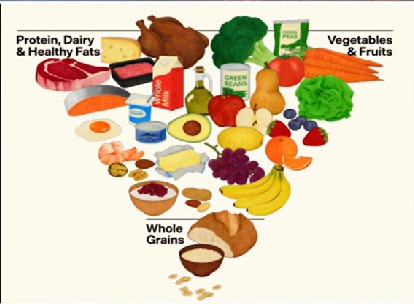
2026, Realfood.gov
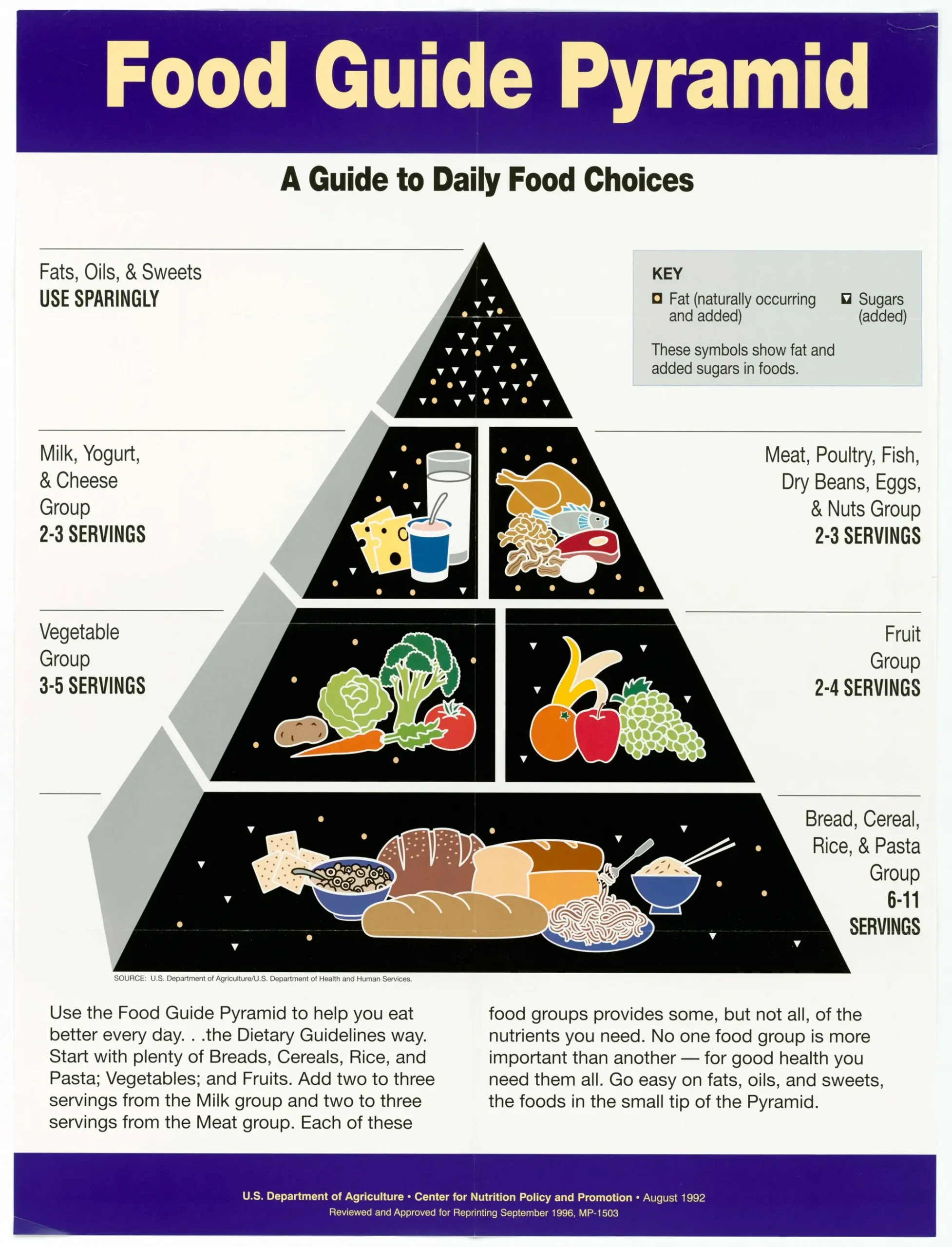
I grew up during the 5 food groups era, illustrated as the first food pyramid. This consisted of 2-3 servings of dairy, 2-3 servings of meat, 3-5 servings of vegetables, 2-4 servings of fruit, and a whopping 6-11 servings of bread, rice, cereal and pasta. That’s a lot of food to stuff into one day.
This was also the time when they started selling Pizza Hut, Lays, Cheetos, Doritos, chocolate bars and other types of candy and chips in the public-school cafeteria.
The result is, we all got fat, which has led to all kinds of reform. Here is a history of what has happened since.
Where does the government get it’s nutrition guidelines and should we follow them?
I have included source links for more information throughout the blog.
Court rules against USDA based on secrecy & conflicts of interest
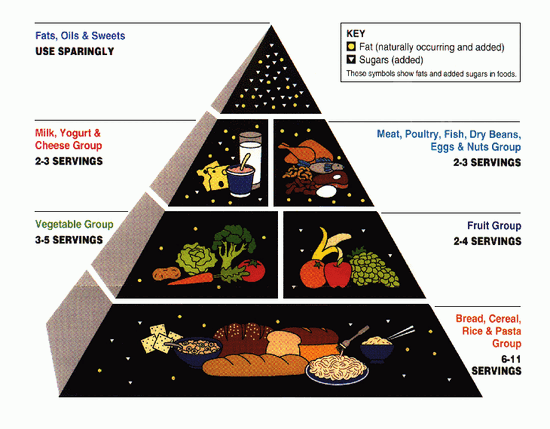
On December 1999, the Physicians Committee for Responsible Medicine (PCRM). and several other individual and group plaintiffs, filed a lawsuit against USDA Secretary Dan Glickman, HHS Secretary Donna Shalala and the Dietary Guidelines Advisory Committee 2000 Chair Cutberto Garza, under the Federal Advisory Committee Act (FACA).
The claim was that FACA’s underlying purpose was to promote certain agricultural interests.
The members were to have been appointed based on their scientific knowledge of nutrition. However, out of 11 members, 6 members currently or recently had financial interests in the meat, dairy or egg industries. Even the Deputy Undersecretary of Agriculture, who participated in meetings, had a business relationship with Dannon dairy products.
The advisory committee’s purpose should have been promoting unbiased information on nutrition so that public health programs that supported nutrition for mothers, infants, children and people at risk of disease would provide accurate support to the public.
I was a new mother on the Nutrition Program for Women, Infants and Children (WIC) at the time. When my child, who had a severe dairy allergy turned 1 year old, the program staff kept telling me I had to feed her dairy. When I said dairy would land my child in the hospital, they insisted on yogurt and cheese (all dairy products). This contradicted the doctor’s orders.
I have nothing against dairy as it is a high in protein, calcium and minerals. But if someone is severly allergic to a substance, they can’t go near it. I had to do some research in order to understand this irrational behavior, and this is how I came across the information I am sharing with you today. I was erroneously led to believe that the staff new what they were talking about and I had to find out where they were getting their information. It turns out, they were not nutritionists or dieticians. They were just repeating the guidelines they were told to repeat without exception.
Earlier in the year, PCRM’s efforts to change federal diet guidelines won support from the NAACP, former Surgeon General Joycelyn Elders, Martin Luther King III, Muhammad Ali, and many others who objected to over promotion of meat and dairy products. Lactose intolerance and diet-related diseases, such as heart disease, diabetes, and hypertension, have a higher incidence among racial minorities. PCRM gained a partial victory in February, when the committee accepted non-dairy foods, such as soy milk, as acceptable alternatives to dairy products.
In October of 2000, the court ruled that the USDA violated federal law by withholding documents and hiding financial conflicts of interest. Judge Robertson faulted the USDA for refusing to provide information involving a payment of over $10,000 to one member and that’s only one example.
USDA Dietary Guidelines – SourceWatch
USDA sued over food pyramid again
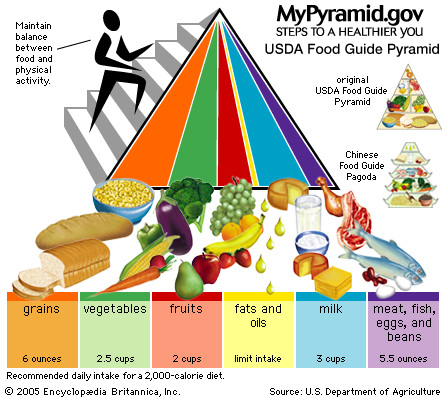
PCRM’s nutrition education director and registered dietitian Susan Levin stated:
“We are asking the government to protect the average American, not special agribusiness interests. MyPyramid is confusing…Research shows the Power Plate is a better choice, and it’s simple enough that a child could follow it.”
Since the first USDA food pyramid was introduced, obesity and diabetes have become commonplace. About 27%t of young adults are now too overweight to qualify for military service. An estimated one in three children born in 2000 will develop diabetes. The lawsuit charges that the federal government address the worsening epidemics of obesity and diet-related diseases by adopting the Power Plate food diagram and dietary guidelines.
The Power Plate graphic is based on current nutrition research showing that plant-based foods are the most nutrient-dense and help prevent chronic diseases. The graphic depicts a plate divided into four new food groups: fruits, grains, legumes and vegetables. There are no portion sizes and food hierarchies to follow. The Power Plate simply recommends eating a variety of all four of its food groups each day.
Healthy plate replaces food pyramid
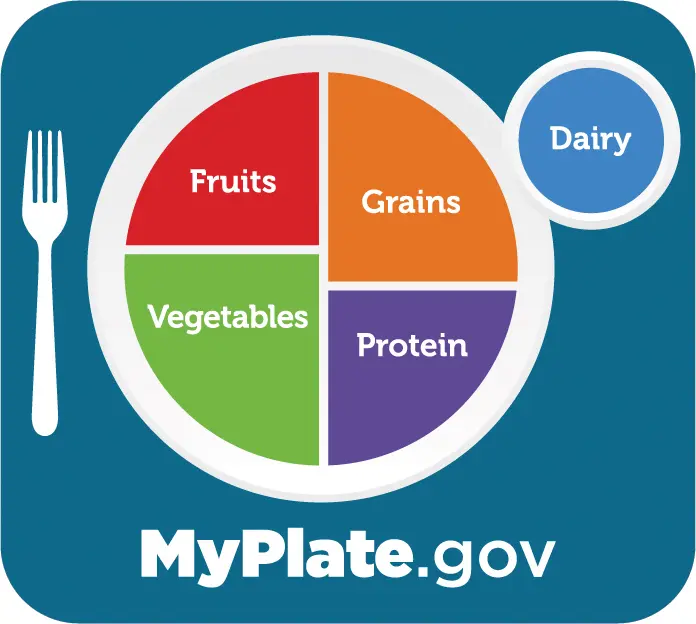
On June 2, 2011, the USDA announced that the ‘Healthy Plate’ would replace the ‘Food Pyramid’.
The PCRM one the battle. The plate was simpler and easier to understand. The plate represented meal portions, fruits and vegetables, consisting of half the plate as most dieticians recommend. The term “protein” is used instead of “meat” so vegetarians wouldn’t be left out, and so people could be informed of other sources of protein.
The term “grains” instead of “bread or cereal” was used because there are so many different types of grains out there, just as there are many sources of protein. While it lacks examples and pictures of certain foods, it’s much easier to understand the portions. Especially since food guidelines of the past recommended ridiculous number of servings such as 6-11 servings of bread, cereal, rice or pasta a day. The food plate doesn’t give specific serving guidelines.
RFK Jr’s campaign for real food and the new upside-down pyramid
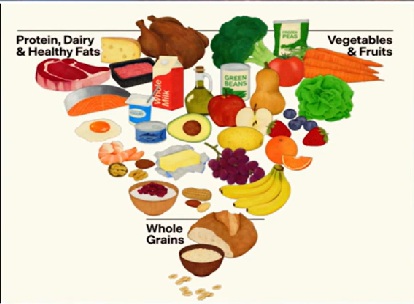
Now it’s finally here, the dietary guidelines of the future, the guidelines Health Secretary, RFK Jr. announced would, “stress the need to eat saturated fats.” While RFK Jr. has advocated against processed foods, he has also said that beef tallow should replace seed oils. He endorses raw milk even though nutrition experts warn that unpasteurized milk increases the risk of contracting disease-causing bacteria that killed many people before the invention of pasteurization.
I find the new pyramid to be confusing. It has pictures of food thrown into a triangle including a stick of butter which is high in calories and saturated fats. On the other hand, in a world where people don’t recognize what real food is when they see it, perhaps pictures are the best way. It is puzzling why steak and cheese is at the very top of the pyramid.
“The Guidelines are right to limit cholesterol-raising saturated (“bad”) fat,” says Neal Barnard, MD, FACC, president of the Physicians Committee for Responsible Medicine. “But they should spell out where it comes from: dairy products and meat, primarily. And here the Guidelines err in promoting meat and dairy products, which are principal drivers of cardiovascular disease, diabetes, and obesity.”
The National Institute of Health (NIH) has always been a great resource for the public regarding scientific research on health and nutrition, but RFK Jr. has already fired thousands of workers from the NIH and the Centers for Disease Control (CDC) and the department of Health and Human Services (HHS).
Without these scientists, who is advising him?
According to Luise Light, Ed.D, who was hired by the USDA to develop a new food guide to replace the “Basic Four” in the 1980s, “Given our national nutrition crisis, it’s vital that the government deliver state of the art nutrition advice that is unfettered by special interests. Being intimately aware of the government’s internal workings, I suggest the responsibility be moved totally to the Department of Health and Human Services where nutritionists don’t have ties to the food industry and officials are less likely to knuckle under to pressures from food lobbies. The USDA’s built-in conflicts of interest must be openly acknowledged so that we can make the shift. Nutrition is too important to leave to anyone who’s interest is convincing us to ‘just eat more.'”
In her article, Light specifically relays her experience in trying to convince the government to create guidelines that reflect proper dietary science, she says, “Where we, the USDA nutritionists, called for a base of 5-9 servings of fresh fruits and vegetables a day, it was replaced with a paltry 2-3 servings (changed to 5-7 servings a couple of years later because an anti-cancer campaign by another government agency, the National Cancer Institute, forced the USDA to adopt the higher standard). Our recommendation of 3-4 daily servings of whole-grain breads and cereals was changed to a whopping 6-11 servings forming the base of the Food Pyramid as a concession to the processed wheat and corn industries. Moreover, my nutritionist group had placed baked goods made with white flour — including crackers, sweets and other low-nutrient foods laden with sugars and fats — at the peak of the pyramid, recommending that they be eaten sparingly. To our alarm, in the “revised” Food Guide, they were now made part of the Pyramid’s base. And, in yet one more assault on dietary logic, changes were made to the wording of the dietary guidelines from “eat less” to “avoid too much,” giving a nod to the processed-food industry interests by
not limiting highly profitable “fun foods” (junk foods by any other name) that might affect the bottom line of food companies.”
According to Light, history shows that just because nutrition experts make recommendations, it is the lobbies and large industries that make the decisions.
A Fatally Flawed Food Guide by Luise Light, Ed.D
Deja vu
Now history is repeating itself once again. the PCRM has announced on their website that the new Dietary Guidelines for Americans were written by authors with strong ties to the food industry. Of nine scientific review authors, at least seven had industry ties. The authors declared receiving research funding or other compensation from the National Cattlemen’s Beef Association, the Texas Beef Council, General Mills, the National Dairy Council, and the National Pork Board, among other companies.
New Dietary Guidelines Were Written by Authors With Strong Ties to the Food Industry, Doctors Report
That explains why beef and milk are at the top of the pyramid. I won’t be surprised if the PCRM present another lawsuit to the USDA in the near future.
We know that the government is not taking recommendations from the HHS as Light suggests because most of the advisers have been fired by the new administration.
That leaves the public in a bind because most information on the internet is also mass propaganda aimed at serving businesses that want our money. Who can we go to for unbiased information on our health if we can’t trust the government guidelines?
The best thing I did for myself was get a national certification in sports/fitness nutrition. I went through ACE because that is where I got my personal training and group fitness certification. Since then, I have less joint pain, more energy and I manage my weight much easier. I get all my information from academic sources, and I know how to navigate scientific studies which can be manipulated and taken out of context by those with conflict of interest. I honestly thought I knew a lot about nutrition in the past from reading books but after learning the science of nutrition, I now understand that many of those books were bunk.
If you’re interested in getting a certification in nutrition from the same place I did, here is the website:
Health and Fitness Certifications, Continuing Education & Resources | ACE
I also use National Institutes of Health as a great resource when siting studies. If you know how to read scientific studies, you can go here:
National Institutes of Health (NIH)
I also have a nutrition category on this blog where I try to give unbiased professional information on the subject here:
Nutrition – WELCOME TO HEROES TRAINING
I’m a huge fan of Examine.com. They are a team of educated researchers with advanced degrees who stay up to date on the latest studies on nutrition, supplements and health and try to present them to the public in a way they can understand. They refuse to advertise in order to avoid conflict of interest. They make their money by selling educational products for a pretty affordable price. You can find them here:
Evidence-based Analysis on Supplements & Nutrition | Examine
I have also subscribed to IDEA, a network of fitness professionals and resources. They have a page of articles you can go to for peer reviewed nutritional information which I have used to keep up to date on the latest studies:
Nutrition Archives – IDEA Health & Fitness Association
Thank you for reading. If you are confused I, and most experts agree that the food plate is the best resource as it is the most backed by science. Check out my other blogs on nutrition where I address subjects such as emotional eating, eating for weight loss, joint pain etc.
Nutrition – WELCOME TO HEROES TRAINING
Feel free to comment if you have anything to add, especially if you are a dietician or nutritionist. I’d love to hear how you navigate nutrition guidelines and information overload, and what do you think of the new food pyramid?